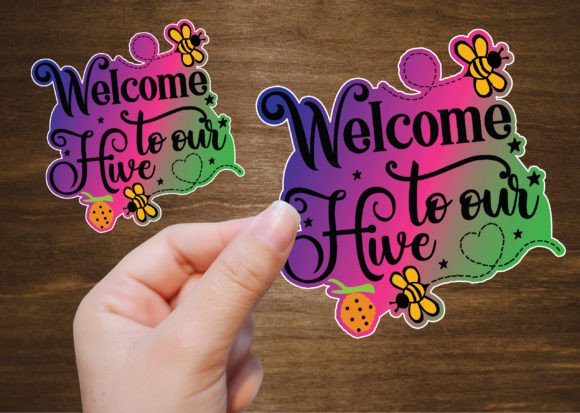
Reviewing Welcome to Our Hive Gradient Color Stick for Embroidery
As a designer who has spent countless hours digitizing and stitching out thousands of patterns, I approach every new machine embroidery design with a mix of curiosity and caution. We have all been there: downloading a file that looks stunning on a screen but turns into a tangled mess of thread breaks and puckering on the fabric. Recently, I took a close look at Welcome to Our Hive Gradient Color Stick, a digital asset categorized under Crafts and Graphics, to determine if it holds up in real-world production.
This is not just about aesthetics; it is about functionality. When you are running a small shop or fulfilling custom orders for clients, reliability is everything. Here is my practical assessment of how this design performs from the digital file to the finished product.
First Impressions and Visual Mood
The first thing that strikes me about Welcome to Our Hive Gradient Color Stick is its warmth. The theme immediately evokes community, nature, and hospitality. For embroidery designers, the visual personality of a design dictates where it belongs. This piece feels organic yet structured, making it versatile enough for modern farmhouse decor or boutique apparel.
The layout appears balanced, which is crucial for maintaining symmetry during stitching. However, because this is a digital INSTANT DOWNLOAD ONLY containing SVG, PNG, DXF, PDF, and EPS files, we must remember that these are primarily vector and raster graphics. While they are high resolution and can be printed on anything such as a T-shirt, Mug, Sign, or Sticker, using them for actual machine embroidery requires an extra step. You will likely need to use embroidery software to convert these graphic elements into a proper embroidery file with defined stitch types like satin stitch, fill stitch, or running stitch.
Real-World Application: The Custom Tote Bag Test
To test the viability of this design, I imagined a common scenario for many Etsy sellers: creating a personalized tote bag design for a local farmers' market vendor. The client wanted something welcoming but professional. Welcome to Our Hive Gradient Color Stick fits this brief perfectly. The gradient concept suggests depth, which can be mimicked in embroidery by carefully selecting thread colors that transition smoothly from light to dark.
If I were stitching this onto a canvas tote, I would focus on the clarity of the lines. Since the original files are high-resolution graphics, the details should remain crisp when resized. For a handmade product like this, the perceived value increases when the design looks intentional and clean. Customers react positively to designs that feel cohesive with the item’s purpose. A hive motif on a market bag tells a story of hard work and natural goods, enhancing the brand consistency for the seller.
Navigating Fabric and Hoop Constraints
While the design is visually appealing, practical application requires careful planning. One major consideration is hoop size. If you plan to use this on smaller items like baby embroidery projects or caps, you must ensure the design scales down without losing integrity. Tiny details can become dense clumps of thread if the stitch density is too high for the scale.
Textured fabrics present another challenge. On a thick towel or a fuzzy sweatshirt, fine lines can get lost. I recommend testing the design on scrap fabric first, especially if you are working with fabric texture variations. For stretchy materials like jersey knits used in custom apparel, a proper stabilizer is non-negotiable. Without it, even the best-designed pattern will pucker and distort, ruining the finished product.
Dark fabrics also require attention. Since this design relies on a gradient effect, you must choose thread colors that contrast sufficiently against the background. A dark navy shirt might swallow up darker shades of the gradient, so opting for brighter or metallic threads could help the design pop. Always check your design in black and white mockups to verify contrast before threading the machine.
Commercial Viability and Brand Trust
For Etsy sellers and craft business owners, the end goal is often sales. Does Welcome to Our Hive Gradient Color Stick add value? Yes, but only if executed well. A sloppy stitch-out damages customer trust, while a clean, professional finish builds it. This design has the potential to be a standout item in a small shop product line, particularly for holiday embroidery gifts or personalized gift items.
However, since the product description specifies it contains SVG, PNG, DXF, PDF, and EPS files, it is vital to understand the licensing. These formats are typically used for cutting machines or printing, not directly for embroidery machines. If you are converting these graphics into an applique design or a full embroidery pattern, you must ensure you have the right to create derivative works for commercial sale. Always confirm licensing before selling commercial embroidery items or digital embroidery file conversions.
Practical Designer Notes
Before you commit to a large batch of sweatshirt embroidery or embroidered patch production, keep these tips in mind:
- Test on Scrap Fabric: Never stitch a new design directly on the final garment. Use similar material to check tension and density.
- Check Thread Contrast: Ensure the gradient translates well with available thread colors. Sometimes, simplifying the gradient to three solid colors works better than a complex blend.
- Inspect Small Details: Zoom in on the SVG or PNG files. Are there tiny elements that might cause thread breaks? Simplify if necessary.
- Verify File Usage: Remember that this is a graphic asset. You may need specialized software to convert these vectors into machine-readable stitch files.
- Consider the End Use: Will this item be washed frequently? If so, ensure the stitch coverage is dense enough to withstand laundering without fraying.
Final Verdict
Welcome to Our Hive Gradient Color Stick is a strong candidate for creators looking to add a touch of warmth and professionalism to their design assets. It offers flexibility across various mediums, from printed signs to stitched apparel. However, its success depends entirely on the skill of the maker in translating these high-resolution graphics into a durable embroidery project.
For those willing to put in the prep work—choosing the right stabilizer, testing thread combinations, and respecting the limitations of different fabrics—this design can elevate a simple item into a cherished keepsake. It is a reminder that in the world of Crafts and Graphics, the best results come from combining beautiful digital art with thoughtful, practical craftsmanship.