Reviewing the Daddy’s Little Peanut SVG for Embroidery
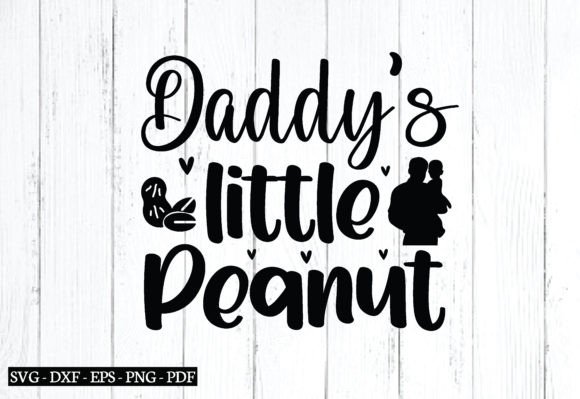
As a designer who spends half my life digitizing and the other half stitching, I have learned that not every cute graphic translates well to thread. When I first pulled up the Daddy s Little Peanut Svg, Father s Day file, my initial reaction was cautious optimism. The theme is undeniably charming, tapping into that warm, nostalgic sentiment that sells well during the spring and early summer seasons. However, charm does not always equal stitchability. I needed to determine if this design would hold up under the needle or if it was merely a pretty picture meant for printing, not embroidery.
The visual personality of this piece leans heavily into playful simplicity. The typography appears rounded and soft, which is ideal for baby-related items, but it poses specific challenges for satin stitching. In my experience, thin, curvy letters can easily become lost in dense fill stitches or look spindly if the column width is too narrow. Before committing to a client project, I always assess the balance between negative space and filled areas. This design seems to offer a good amount of breathing room, which is crucial for maintaining clarity on textured fabrics like terry cloth or waffle weave towels.
Real-World Application: The Custom Tote Test
To truly evaluate the Daddy s Little Peanut Svg, Father s Day, I imagined a common scenario for my small shop: a rush order for personalized baby shower gifts. I decided to visualize this design on a heavy canvas tote bag, a popular item for eco-conscious parents. The goal was to create a functional, durable handmade product that could carry diapers and bottles while looking stylish.
In this context, the design’s layout is critical. A tote bag offers a large, flat surface, but the fabric has a distinct weave. If the stitch density is too high, the fabric will pucker, ruining the professional finish. If it is too low, the backing might show through. Since this is a digital download containing SVG, PNG, DXF, PDF, and EPS files, I had to consider how these formats translate to my embroidery software. While the SVG and DXF are vector-based and excellent for resizing without quality loss, they do not automatically generate stitch paths. As an experienced reviewer, I must clarify that these are graphic assets. You will need to digitize them yourself or use auto-digitizing features with caution. For a polished embroidery project, manual adjustment of underlay and pull compensation is non-negotiable.
Material Considerations and Stitch Strategy
When working with a phrase like "Daddy's Little Peanut," the choice of thread and fabric dictates the success of the finished product. I recommend using a satin stitch for the lettering to achieve that smooth, glossy look associated with high-end custom apparel. However, satin stitches have limits. If you are scaling the design down for a tiny embroidered patch or a baby onesie pocket, the letters may become too narrow for standard satin columns. In such cases, switching to a running stitch or a very light fill stitch might preserve legibility.
Fabric texture plays a massive role here. On smooth cotton or polyester blends, the design will pop with vibrant thread colors. But if you are attempting sweatshirt embroidery on a fuzzy fleece, the details can get swallowed by the nap. I advise using a contrasting top thread color against the fabric background to ensure the text remains readable from a distance. For dark fabrics, a white or cream thread creates a classic, clean look, but remember that light threads on dark fabric require careful tension settings to prevent the bobbin thread from peeking through.
Navigating Technical Challenges
There are specific scenarios where you should approach this design with care. First, consider the hoop size. If you are working with a small 4x4 hoop, you may need to split the design or reduce it significantly. Reducing vector graphics is easy, but reducing embroidery requires re-digitizing to maintain proportion. Second, be wary of curved surfaces like caps. The curvature of a baseball cap distorts straight lines and can make centered text appear arched or uneven unless properly compensated in the digitizing phase.
Another critical factor is the stabilizer. For stretchy fabrics like jersey knits used in baby clothes, a cut-away stabilizer is essential to prevent distortion after washing. For woven fabrics like aprons or pillow covers, a tear-away might suffice, but only if the stitch density is moderate. Always test the design on scrap fabric first. This step saves time, money, and reputation. Check for thread breaks, puckering, and registration issues before stitching on the final garment.
Commercial Viability for Etsy Sellers
For Etsy sellers and craft business owners, the appeal of Daddy s Little Peanut Svg, Father s Day lies in its versatility. It fits perfectly into the niche of holiday embroidery and year-round baby gifts. The inclusion of multiple file formats like PNG and PDF allows for hybrid products. You can use the PNG for printable mockup previews on your shop listings, giving customers a realistic idea of the final look without stitching every sample. The PDF and EPS files are useful for creating packaging inserts or branding materials, enhancing the perceived value of your small shop product.
However, commercial use rights must be verified. Since this is an instant download with no physical product shipped, ensure you understand the license terms regarding mass production versus handmade sales. Most designers allow for finished physical goods but restrict the resale of the digital file itself. Always read the specific license included in the download package.
Final Design Verdict
The Daddy s Little Peanut Svg, Father s Day is a strong contender for your design assets library, provided you approach it with technical diligence. It is not a plug-and-play embroidery file but rather a high-quality graphic source that rewards careful digitizing. Its strength lies in its emotional resonance and clean lines, which translate well to personalized gift markets. Whether you are creating baby embroidery for a boutique or tote bag design for a craft fair, this graphic offers a solid foundation.
Remember to check thread contrast, adjust density for your specific fabric, and always stabilize appropriately. With these precautions, this design can elevate your commercial embroidery offerings, providing customers with a heartfelt, professionally executed item that stands out in a crowded marketplace. It is a reminder that in the world of Crafts and Graphics, the best results come from marrying creative vision with technical precision.