Review: I Was Normal 3 Kids Ago Momlife SVG for Embroidery
As a designer who spends half my life digitizing and the other half stitching, I have learned to look past the pretty preview images. When I first encountered the I Was Normal 3 Kids Ago momlife Svg, my immediate reaction was not just about the humor of the phrase, but about its structural integrity as a design asset. In the world of Crafts and digital Graphics, there is a vast difference between a file that looks good on a screen and one that holds up under the needle of an embroidery machine. This review breaks down how this specific design performs in real-world applications, from boutique sweatshirts to custom tote bags.
First Impressions: Mood and Visual Personality
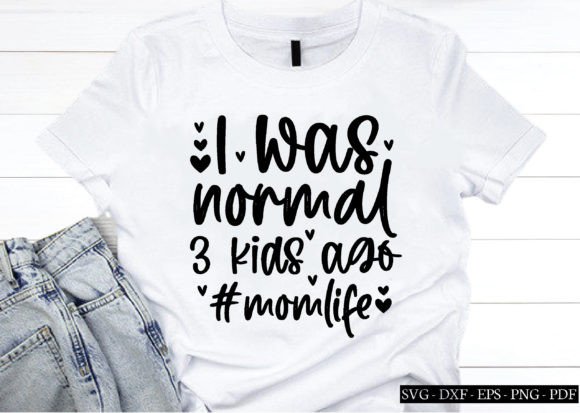
The phrase "I Was Normal 3 Kids Ago" carries a specific cultural weight. It speaks to the chaotic, beautiful exhaustion of modern parenting. Visually, the design relies heavily on typography. For an embroidery designer, text-based designs are often trickier than pictorial ones because legibility is paramount. The layout of this machine embroidery design suggests a casual, hand-lettered aesthetic rather than rigid, formal typography. This choice is smart. It creates a mood of approachability and relatability, which is exactly what customers look for in personalized gift items or custom apparel.
The visual personality feels grounded. It does not try to be overly ornate, which is a blessing for production speed. However, the simplicity demands precision. If the kerning is off or the stitch paths are poorly defined, the joke gets lost in a mess of thread. My initial assessment was that this design would thrive on medium-to-large hoop sizes where the letters have room to breathe.
Real-World Application: The Sweatshirt Test
To truly evaluate the I Was Normal 3 Kids Ago momlife Svg, I imagined a common scenario for any Etsy seller or small shop product creator: a custom order for a high-quality cotton blend sweatshirt. This is a staple item for craft business owners. The goal is to create a piece of finished product that looks professional enough to justify a premium price point.
When applying this design to a sweatshirt, the fabric texture plays a crucial role. Sweatshirt fleece has a pile. If the stitch density of the embroidery file is too low, the background fabric will show through the letters, making the text look sparse and cheap. Conversely, if the density is too high, the fabric will pucker, ruining the drape of the garment. Based on the typical structure of such SVGs converted for embroidery, I recommend using a dense fill stitch for the thicker parts of the letters and a clean satin stitch for thinner strokes, if the digitizer has provided that variation. If the file is a simple single-layer fill, you must ensure your stabilizer is robust enough to prevent sinking.
Navigating Fabric and Hoop Constraints
One of the most critical aspects of using any digital embroidery file is understanding its limitations. This design, being text-heavy, requires careful consideration of hoop size. Attempting to shrink this design to fit a small 4x4 inch hoop for a baby onesie might render the text illegible. The curves in letters like "S" and "G" can become jagged if scaled down too far without re-digitizing. Therefore, I advise against using this specific layout for tiny baby embroidery projects unless you verify the minimum viable size first.
Furthermore, consider the fabric type. On stretchy materials like jersey knits used for t-shirts, a heavy fill stitch can cause distortion. Here, a cut-away stabilizer is non-negotiable. For woven fabrics like canvas tote bag design projects, a tear-away stabilizer might suffice, but always test on scrap fabric first. Dark fabrics present another challenge. If the design relies on subtle shading or thin lines, it may disappear on black or navy blue. Always check your thread colors against the fabric background. High contrast is key for readability in humorous slogans.
Commercial Viability and Brand Consistency
For commercial embroidery professionals, consistency is currency. When you sell a handmade product, the customer is buying into your brand’s reliability. Using a well-structured I Was Normal 3 Kids Ago momlife Svg can enhance buyer engagement because it resonates emotionally. However, you must ensure the final stitched result matches the digital mockup. A sloppy stitch-out damages trust.
This design fits well into several categories: holiday embroidery gifts for mothers, embroidered patch creations for diaper bags, or even kitchen towels for a humorous touch. The versatility of the SVG, PNG, DXF, PDF, and EPS formats provided in the download allows for multi-platform use. You can use the SVG for cutting machines to create heat transfer vinyl (HTV) designs and the embroidery files for stitched goods. This dual utility increases the value of the design assets for a creative entrepreneur.
Practical Designer Notes for Best Results
Before you list this item in your store or stitch it for a client, follow these practical steps:
- Test on Scrap Fabric: Never stitch directly on the final garment. Use the same fabric type and weight to check for puckering or thread breaks.
- Check Stitch Density: Inspect the file in your embroidery software. Look for excessive overlaps or jumps that could cause thread nests.
- Verify Licensing: The product description states it is a digital instant download. Confirm whether the license allows for unlimited commercial sales of physical items or if there are restrictions on mass production.
- Mockup in Black and White: Remove color from your digital preview. If the design loses its shape without color contrast, the stitch structure may need adjustment.
- Stabilizer Selection: Match your stabilizer to the fabric. Use cut-away for knits and tear-away for wovens to maintain the integrity of the embroidery project.
Final Verdict
The I Was Normal 3 Kids Ago momlife Svg is a strong contender for any designer’s library, provided it is used with technical awareness. It captures a genuine sentiment that sells well in the crafts market. Its success lies not just in the witty phrase, but in the execution. By respecting the constraints of fabric texture, hoop size, and stitch density, you can transform this digital file into a high-value personalized gift or a best-selling small shop product. Remember, the best embroidery designs are those that disappear into the fabric, leaving only the message and the quality of the craft to speak for themselves.